
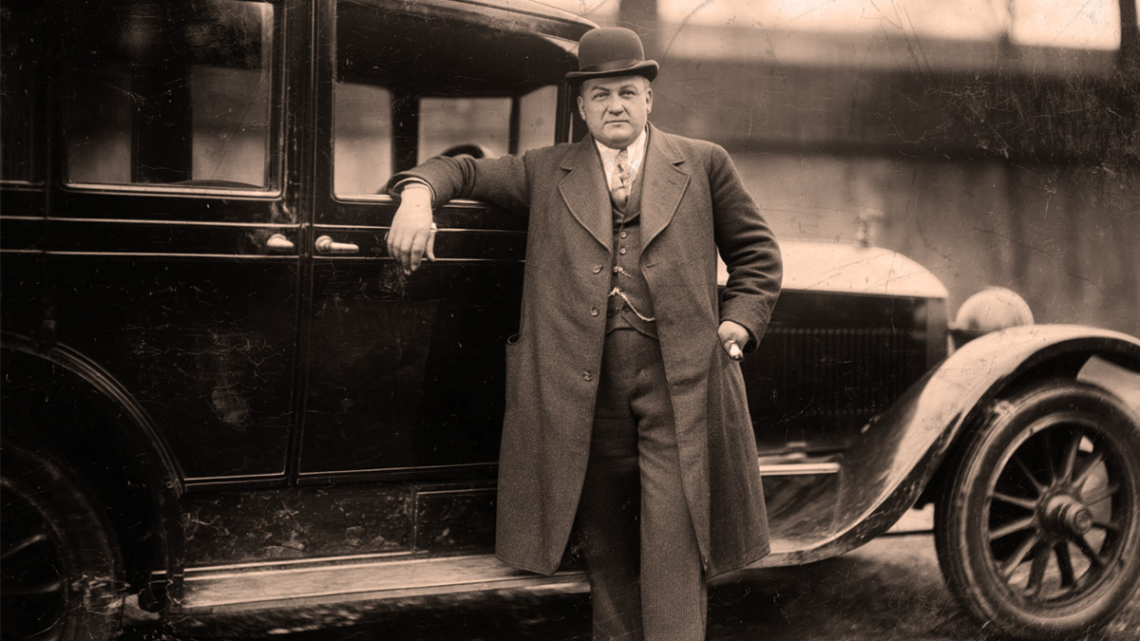
Biography: George Remus
Let’s do another biography. George Remus isn’t as obscure as, say Jeanne de Clisson. Nor is he as famous as Rasputin. It’s still a wild story. Here’s the tale of a lawyer turned bootlegger turned murderer turned retiree.
We begin in early 1900s. George Remus and his family immigrated to the US from Germany. His father was an alcoholic, so George was forced to work to provide for the family. He worked for his uncle in a pharmacy, and eventually worked his way up the chain, owning multiple pharmacies in Chicago. That wasn’t good enough for our unsung hero, so he went to law school and became a defense attorney. He abhorred the death penalty and would do whatever he could for his clients. One of his favorite tactics was the “transitory insanity” defense. You know in TV and movies where someone claims “temporary insanity”? George Remus might not have invented it, but he sure as hell made it famous.
He was a very good lawyer. Soon, he was making $8 million a year (in today’s money). Now, you might think that he’d made it. He was the American dream. He started with nothing, but through hard work and focus, he became wealthy and famous. There was no reason to go further. He’d reached the top. Hell, if I had ONE million, I’d retire, let alone 8 million a YEAR. Remus, however, was ambitious.
Around this time, prohibition had arrived in the US. Religious and prudish people had gotten alcohol banned. Sort of. The thing about Americans is we don’t like being told what to do. *cough*masks*cough. So all that really happened was instead of being taxed and sold in legit bars and restaurants, alcohol was bought and sold on the black market, in speakeasies, and on the “down low” as they put it. Interestingly, many of the speakeasies were integrated. No one cared what color your skin was, as long as you liked getting knackered.
Many of George’s clients were bootleggers. While defending them, he came across a loophole in the Volstead Act. Alcohol was illegal for consumption. It was illegal for the average citizen. It was illegal for restaurants. But it was still allowed for the manufacture of medicine. And wouldn’t you know it, George started in pharmacies.
Remus moved to Cincinnati, where many distilleries were. He bought them up, and at one point, he owned 35% of the alcohol in the country. His plan was genius. HIS pharmacies would buy alcohol from HIS distilleries. They would ship them through HIS shipping company. Then HIS people would rob HIS shipping trucks of HIS alcohol and sell it on the black market. It was fool proof. And 80 proof.
Business was booming. Way back then, many cops and public servants were corrupt, unlike today. He had crazy amounts of money, so he’d bribe them and all was well in the world. He had a mansion, with extravagant parties. Some have claimed that Gatsby from The Great Gatsby took some inspiration from George Remus. The parties were partying. The drunks were drinking. At one of his parties, he allegedly gave a bunch of people brand new cars. Plural. Like 40 of them.
As with all good things, it couldn’t last. Eventually he was arrested on over a thousand cases of violating the prohibition law. He was sentenced to 2 years in prison. While in prison, he became friends with another inmate, Franklin Dodge. Dodge figured out that Remus’ wife, Imogene, had control of all the money. Dodge, however, was actually an undercover agent. But he was also an asshole. Rather than tell anyone where the money was, he seduced Imogene. The two lovers spent or hid all of Remus’ money. Imogene gave George $100, out of an empire worth tens of millions of dollars. They even tried to hire an assassin to kill George Remus, but the assassin was like, “Uh. No. Remus is a big deal.”
After serving his time, Remus got out and was met with divorce papers. Being ever the reasonable man, he ran Imogene off the road, pulled a gun, and executed her. In public. During the day. In front of her child from a previous marriage. He turned himself in. During the trial, he claimed temporary insanity, due to the betrayal and stolen money. It took the jury (of all men) less than 20 minutes to acquit him, to cheers and rejoice from the crowd. Men REALLY didn’t like thieving sluts back then.
He was sent to a mental asylum, you know, because he was “temporarily insane”, but was released after only 7 months.
He moved to Kentucky, remarried, and lived a quiet life for the next 20 years. He died in 1952 at the ripe old age of 75.
Was he a hero or a villain? He was known to be cruel, yet extravagant with gifts to his friends. He was a criminal, but the law was stupid. He was everything Americana wanted a person to be, but he was everything American had become. He fought for individual liberty and rights, but also, you know, murdered his wife.
Either way, it’s still a crazy story.

Chris Dantes
My name is Chris. I currently live in Seattle, though I’m formerly from California. I'm a writer, comic, and superhero (allegedly). I complain. A lot. About everything. I also tell jokes.
